
A cross-chain swap can fail even when the exchange rate looks excellent. The surprising part is that the most consequential mistake may happen before the swap itself: a token approval granted days or months earlier can still authorize a contract to spend assets. In other words, DeFi safety is not only about choosing the right route between chains. It is also about understanding which contracts can act on your behalf, for how much, and under what conditions.
That distinction matters for US users moving assets among Ethereum, Arbitrum, Base, Optimism, Polygon, and other networks. A wallet is not merely a place where balances appear. It is an interface for signing permissions, interacting with applications, and interpreting transactions whose economic consequences may be difficult to see at a glance. Cross-chain swaps and token approval management therefore belong in the same conversation.
How cross-chain swaps evolved from bridge transfers to routed execution
Early cross-chain activity was often described as a simple bridge operation: lock or deposit an asset on one network, then receive a representation of it on another. That model remains important, but the user experience has become more layered. Modern swap interfaces may combine liquidity pools, bridges, aggregators, and destination-chain transactions into one guided flow. The apparent simplicity hides a sequence of actions that can involve several contracts and two different security environments.
A useful mental model is to separate three questions. First, where is the asset currently held? Second, which mechanism transports or represents value on the destination chain? Third, which contract receives permission to spend the token? These questions are related, but they are not identical. A bridge can move value between networks, while a decentralized exchange contract can swap it, and an approval transaction can grant spending authority before either operation occurs.
This is why “cross-chain swap” is not one technical primitive. It is a user-facing description of a route. The route may depend on available liquidity, bridge design, slippage limits, gas costs, settlement timing, and the reliability of the contracts involved. A favorable quoted price can be offset by a poor execution path, a destination-chain fee, or a transaction that remains pending while market conditions change.
Rabby wallet versus a conventional wallet workflow
The relevant comparison is not simply one wallet brand against another. It is a comparison between two operating styles: a basic signing interface that leaves much of the interpretation to the user, and a risk-aware workflow that attempts to explain what a transaction will do before it is approved.
With a conventional wallet workflow, the user may see a contract address, a token symbol, and a request to confirm. That can be enough for routine transfers, but it is less reassuring when a transaction requests permission to spend a token or calls several contracts in sequence. The interface may not make the difference between a limited approval and an effectively unlimited allowance obvious.
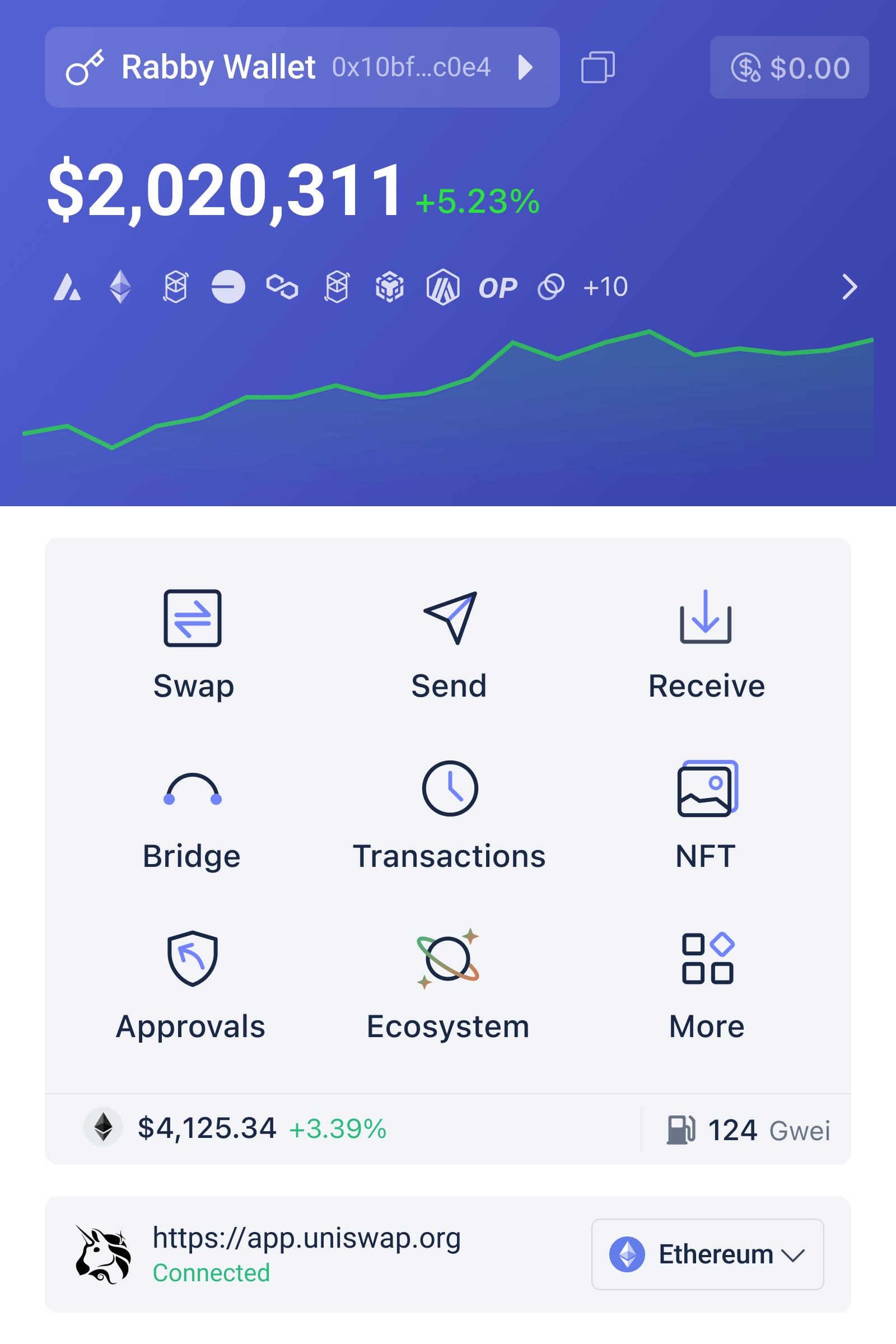
A Rabby wallet workflow is designed around transaction interpretation and security warnings. That does not eliminate smart-contract risk, bridge risk, phishing, or user error. It can, however, improve the decision surface by highlighting simulation results, contract interactions, network details, and potential warnings before signing. Users considering installation should obtain the rabby wallet extension only from a source they can verify, then confirm that the extension, browser, and operating system are current.
The trade-off is worth stating clearly: a more informative interface is not the same as an infallible security system. Simulations can be incomplete, contract behavior can change, and a warning may reflect uncertainty rather than proof of malicious activity. Conversely, the absence of a warning is not a guarantee that a transaction is economically sensible. The wallet can improve visibility; the user still owns the final judgment.
Token approvals: the permission layer behind many swaps
Most fungible tokens on Ethereum-compatible networks follow a standard that lets an owner authorize another address to spend tokens on the owner’s behalf. A decentralized exchange usually needs this permission before it can pull tokens into a swap. The approval is a separate on-chain transaction from the swap itself, although some applications can combine actions through specialized contract patterns.
The key misconception is that an approval is a one-time checkout authorization. In many cases, it is a standing allowance. If a user approves a large amount, the authorized contract may be able to spend that amount later, subject to the token’s rules, until the allowance is reduced, replaced, or consumed. The risk is not necessarily that the exchange contract is malicious today. It is that a vulnerable, upgraded, compromised, or incorrectly identified contract could become a problem while permission remains active.
Approval management is therefore closer to access control than to ordinary spending. A useful comparison is a corporate purchasing card: a low limit constrains the damage if credentials are misused, while an open-ended limit depends heavily on the institution’s continued integrity. For frequent traders, unlimited approvals can reduce friction and gas costs. For occasional users or unfamiliar protocols, smaller allowances may offer a better risk trade-off, even if they require additional transactions.
Unlimited approvals and limited approvals
Unlimited approvals are convenient because a user does not need to approve the same token repeatedly. They may also be efficient when interacting regularly with a well-understood application. But convenience shifts risk into the future. The user may forget which contracts were authorized, and the approval can remain relevant after the original swap is complete.
Limited approvals constrain the amount a contract can draw. They are not a complete defense: a malicious transaction can still misuse the approved amount, and a compromised wallet can sign new permissions. Yet the limit changes the maximum exposure from one approval event. For many users, particularly those experimenting with a new cross-chain route, that boundary is meaningful.
Cross-chain swap risk is more than price slippage
Slippage is the visible risk: the final amount received differs from the quoted amount because prices or liquidity change. Cross-chain execution adds less visible dimensions. A bridge may introduce waiting time, a destination transaction may require a separate gas token, and a route may depend on an intermediary that is neither the original token issuer nor the exchange interface.
There is also a representation problem. An asset with a familiar ticker on one chain may not be the same contract address as an asset with the same ticker elsewhere. Wallet users should verify the network and token contract rather than relying on symbols alone. This matters especially when a route produces a bridged representation, because “receiving the same asset” may mean receiving an economically related version rather than the original asset.
Another boundary condition is liquidity. A route can be technically successful but economically poor if the destination market is shallow. Large price impact may be hidden by an attractive headline rate, particularly when the interface aggregates multiple steps. The right comparison is not only the quoted exchange rate but the expected amount received after fees, bridge costs, gas, price impact, and any additional destination-chain action.
A practical decision framework before signing
Before approving a cross-chain swap, start with the route rather than the brand. Identify the source network, destination network, input token, output token, and the contracts that will receive permissions. If the wallet displays a simulation or warning, read it as an explanation to investigate, not as a box to dismiss.
Next, ask whether the approval amount matches the intended trade. If a small swap requests permission to spend an unusually large balance, pause. The request may be a standard unlimited approval, but standard does not mean risk-free. Consider whether the application is familiar, whether the contract address is the expected one, and whether keeping a standing allowance is worth the convenience.
After the transaction, approval management should be treated as routine maintenance. Review allowances periodically, especially after testing unfamiliar protocols, participating in token launches, or using bridges and aggregators. Revoke or reduce permissions that are no longer needed, while recognizing that revocation itself is an on-chain transaction with a network fee. On a high-fee network, grouping this maintenance around other activity may be practical; on a low-fee network, more frequent cleanup may be easier.
For a US user, tax and record-keeping considerations add another layer. A swap, bridge, or token conversion may create a transaction history that is more complex than a simple wallet transfer. The wallet can help users understand on-chain actions, but it is not a substitute for professional tax advice or careful records. Network, asset, timestamp, cost basis, and transaction purpose can all matter when reconstructing activity.
What to watch as wallets become transaction interpreters
The likely direction of wallet design is not merely prettier signing screens. The more important development is better interpretation: showing the intended outcome, the contracts involved, the permissions requested, and the difference between an immediate action and a lasting authorization. If these tools become more accurate, users may make fewer decisions based on raw hexadecimal data or familiar token symbols.
Still, interpretation has limits. Smart contracts can be composable, state-dependent, and difficult to summarize without losing important detail. A simulation can show what appears likely under current conditions, but it cannot prove that a protocol will remain safe tomorrow. The strongest workflow is therefore layered: use a wallet’s warnings and simulations, verify the route and contract context, limit approvals where sensible, and avoid signing when the economic result is unclear.
The deeper lesson is that cross-chain convenience changes the unit of risk. It is no longer enough to ask whether a wallet is secure or whether a swap has a good rate. The better question is: what permissions, dependencies, and assumptions does this particular route create? Once users begin evaluating swaps that way, token approval management stops being an obscure technical chore and becomes part of ordinary financial hygiene.
Frequently asked questions
Does a cross-chain swap always require a token approval?
No. It depends on the token standard, the application, and the execution method. Many decentralized exchanges require an approval so a contract can transfer the input token, while some workflows use alternative authorization designs or native assets that do not follow the same allowance model.
Is an unlimited token approval automatically unsafe?
Not automatically. It is a convenience choice that creates potentially broader future exposure than a limited approval. The practical risk depends on the authorized contract, the token, the application’s security, and whether the allowance remains active after use. Reducing or revoking unnecessary approvals can narrow that exposure.
Can a wallet guarantee that a cross-chain swap is safe?
No. A wallet can improve visibility through transaction simulations, warnings, and clearer contract information, but it cannot eliminate bridge failures, smart-contract vulnerabilities, market risk, phishing, or mistakes in user judgment. Treat wallet protection as one layer in a broader process.
What is the most useful habit for new DeFi users?
Pause before signing and identify the permission being granted. Confirm the network, token contract, recipient or spender, approval amount, expected output, and destination-chain requirements. If any part of the transaction cannot be explained in plain language, do not treat speed as a reason to continue.